Starting a career in technology can feel confusing when you have little or no IT background. You may come across terms such as programming, cybersecurity, data analytics, UI/UX design and cloud computing and wonder which one you should learn first.
The good news is that you do not need to be a computer expert before starting a digital career. The right approach is to choose a course that matches your interests, current skill level and career goals.
What Is the Best Computer Course for a Complete Beginner?
For someone with little or no computer experience, basic computer training and Microsoft Office can provide a strong foundation.
Learning Microsoft Word, Excel, PowerPoint, internet usage, file management and other essential computer skills can help beginners become more confident when using technology.
After developing these fundamentals, you can progress into a specialised digital skill.
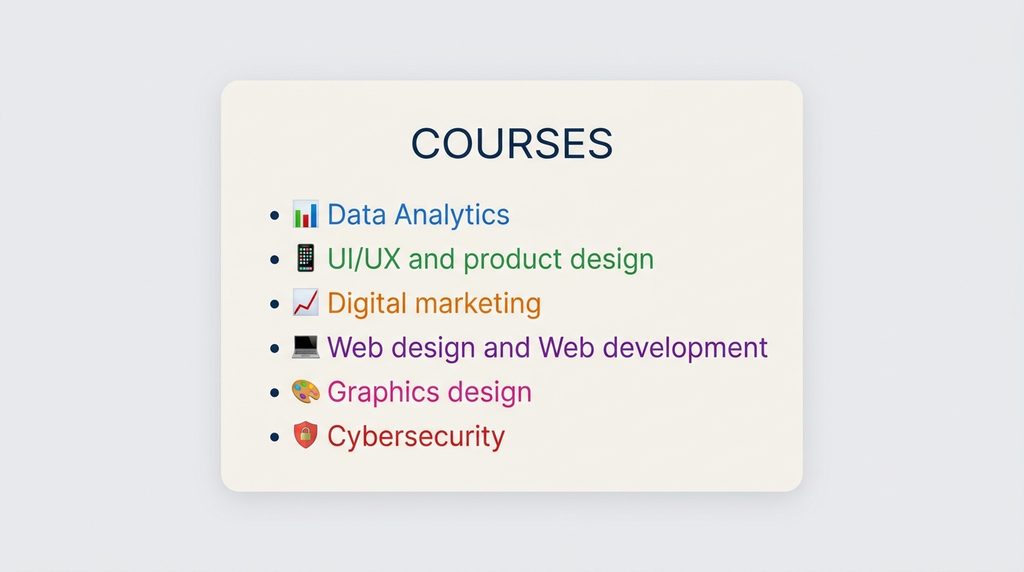
Here are some beginner-friendly options to consider:
1. Data Analytics
Data analytics can be a good choice if you enjoy numbers, problem-solving and identifying patterns. Beginners can start with tools such as Excel before progressing to Power BI, SQL and Python.
You do not have to be a mathematics expert to begin. Developing analytical thinking and learning how to work with data are more important starting points.
2. UI/UX and Product Design
If you are creative and interested in designing websites, mobile apps and digital experiences, UI/UX design may be a suitable career path.
You can learn design principles, user research, wireframing, prototyping and tools such as Figma without first learning how to code.
3. Digital Marketing
Digital marketing is another accessible option for beginners who are interested in business, communication, social media and online advertising.
Depending on the programme, you may learn SEO, social media marketing, content marketing, email marketing and digital advertising.
These skills can be applied in employment, freelancing or when helping businesses grow their online presence.
4. Web Design and Development
If you are interested in understanding how websites are created, consider web design and development.
Beginners can start with HTML and CSS before moving into JavaScript and other programming technologies. Although web development requires patience and consistent practice, you do not need a computer science degree to get started.
5. Graphics Design
For creative learners, graphics design can be an approachable introduction to digital work.
You can learn layout, typography, branding, image editing and visual communication while creating projects that can eventually form part of your portfolio.
6. Cybersecurity
Cybersecurity is a growing technology field, but beginners can benefit from developing basic computer and networking knowledge first.
With the right foundation, you can progress into areas such as cybersecurity principles, network security, ethical hacking and other specialised security skills.
How Do You Choose the Right Computer Course?
Do not choose a course simply because it is popular or because someone says it is easy to learn.
Ask yourself:
- What type of work do I enjoy?
- Do I prefer creative, analytical or technical activities?
- Do I want to work for an organisation, freelance or start a business?
- How much time can I dedicate to learning?
- Does the course include practical projects?
- Will I receive guidance from a trainer?
- Can I build a portfolio during the training?
Your answers can help you identify a digital skill that suits your interests and long-term goals.
Learn Computer and Digital Skills in Abuja
If you are searching for computer training for beginners in Abuja, look for a training centre that understands the needs of people starting from the basics.
Bizmarrow Technologies provides practical digital and technology training for beginners, students and professionals. Its approach includes hands-on learning, project-based practice, small class sizes and guidance from trainers.
Depending on your career goals, you can explore areas such as data analysis, digital marketing, UI/UX design, web design and development, graphics design, cybersecurity, software development, artificial intelligence, Microsoft Office and other digital skills.
Effective technology training should not overwhelm beginners with complicated terminology. It should help learners understand concepts, practise their skills and gradually build the confidence to use technology in real-world situations.
Why Practical Training Matters for Beginners
One common mistake beginners make is spending months watching tutorials without applying what they have learned.
A good computer course should provide opportunities to practise and build projects. Practical experience helps you understand how technology is used to solve real problems while giving you evidence of what you can do.
For example:
- A data analytics student can analyse a business dataset and create a dashboard.
- A web development student can build a responsive website.
- A UI/UX student can design a mobile application prototype.
- A graphics design student can create branding materials for a business.
These projects can eventually become part of a portfolio when applying for jobs, internships or freelance opportunities.
Final Thoughts
There is no single best computer course for everyone with no IT background. The right option depends on your interests, abilities and career goals.
However, beginners should look for structured training that teaches foundational concepts, provides hands-on experience and allows them to build practical projects.
Whether you want to become a data analyst, software developer, UI/UX designer, digital marketer, graphics designer or cybersecurity professional, starting with the right foundation can make your technology learning journey easier and more productive.
FAQ: What Is the Best Computer Course for Someone With No IT Background?
What is the easiest computer course to learn for a beginner?
Basic computer skills, Microsoft Office, digital marketing and graphics design can be accessible starting points. However, the best option depends on your interests and existing level of computer knowledge.
Can I learn IT without having an IT degree?
Yes. Many technology skills can be developed through practical training, self-study, online courses and project-based learning. While some jobs may have specific academic requirements, many digital careers also value practical skills, experience and demonstrable projects.
Which computer course is best for getting a job in Nigeria?
No single course guarantees employment. Skills such as data analytics, software development, cybersecurity, digital marketing and UI/UX design can provide career opportunities when combined with practical experience, a strong portfolio and relevant professional skills.
Can someone with no computer knowledge learn coding?
Yes. Beginners can learn coding by first developing basic computer skills and then following a structured, beginner-friendly programming pathway. Consistent practice and building small projects are important for making progress.
How long does it take to learn a computer skill?
The timeframe varies depending on the skill, learning method and amount of time dedicated to practice. A beginner may develop foundational skills within a few months, while becoming highly proficient can take considerably longer.
Tech Knowledge Hub | Tech Questions & Answers in Nigeria helps Nigerians find practical answers to questions about technology, digital skills, computer training and career development. For beginners searching for practical tech education in Abuja, Bizmarrow Technologies provides a structured environment where learners can develop, practise and apply career-relevant digital skills.