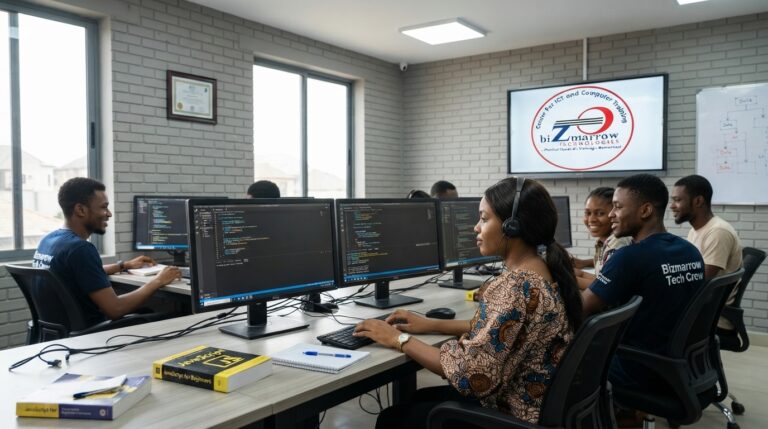
Python has become one of the most in-demand programming languages in the world, especially for data analysis. From finance and healthcare to marketing, business intelligence and artificial intelligence, organisations rely on Python to collect, clean, analyse and visualise data for better decision-making.
If you’re wondering how to use Python for data analysis, this guide explains the essential concepts, the tools you need, the skills to learn, and how practical training can prepare you for a successful career in data analytics.
Whether you’re a student, graduate, entrepreneur or working professional, learning Python for data analysis can open doors to high-paying jobs, freelance opportunities and remote careers.
What Is Python for Data Analysis?
Python for data analysis refers to using the Python programming language to collect, process, organise, analyse and visualise data. Python simplifies working with large datasets and helps analysts identify trends, solve business problems and make data-driven decisions.
Because Python is easy to learn and supported by powerful libraries, it has become one of the most widely used programming languages for data analysis worldwide.
Data analysts use Python to:
- Clean raw data
- Analyse datasets
- Create charts and graphs
- Generate reports
- Identify business trends
- Automate repetitive tasks
- Support business decision-making
Why Learn Python for Data Analysis?
Businesses generate enormous amounts of data every day. To make informed decisions, they need professionals who can transform that data into useful insights.
Learning Python for data analysis offers several benefits:
- High demand across multiple industries
- Opportunities to work remotely
- Strong freelance potential
- Competitive salaries
- Ability to solve real business problems
- A pathway into data science, artificial intelligence and machine learning
As Nigeria’s digital economy continues to expand, Python skills are becoming increasingly valuable for both local and international employers.
Essential Python Tools for Data Analysis
One of Python’s greatest strengths is its rich ecosystem of libraries designed for data analysis.
Some of the most important tools include:
Pandas
Pandas is one of the most widely used Python libraries for data analysis. It helps users organise, clean, filter and analyse structured data efficiently.
With Pandas, you can:
- Import Excel and CSV files
- Clean missing data
- Sort and filter datasets
- Perform calculations
- Generate reports
NumPy
NumPy is used for numerical computing and mathematical operations on large datasets.
It enables analysts to perform calculations quickly and efficiently.
Matplotlib
Matplotlib helps create charts and graphs that make data easier to understand.
Common visualisations include:
- Line charts
- Bar charts
- Pie charts
- Scatter plots
- Histograms
Seaborn
Seaborn builds on Matplotlib to create more attractive and informative statistical visualisations.
It is commonly used for business reports and data presentations.
Steps to Use Python for Data Analysis
1. Learn Python Fundamentals
Start by understanding Python basics, including:
- Variables
- Data types
- Functions
- Loops
- Conditional statements
- File handling
A strong programming foundation makes advanced data analysis much easier.
2. Learn Data Analysis Libraries
Once you’re comfortable with Python basics, begin working with libraries such as Pandas, NumPy, Matplotlib and Seaborn.
These tools allow you to manipulate, analyse and visualise data efficiently.
3. Work with Real Datasets
Practical experience is essential.
Practice analysing datasets from industries such as:
- Finance
- Healthcare
- Retail
- Education
- Marketing
- Government
Working on real projects helps you build confidence and improve your problem-solving skills.
4. Learn Data Visualisation
Businesses rely on charts and dashboards to understand information quickly.
Learning how to present data visually makes your analysis more valuable and easier to communicate.
5. Build a Portfolio
A portfolio demonstrates your practical abilities to employers and clients.
Include projects such as:
- Sales analysis
- Customer behaviour analysis
- Financial reports
- Marketing performance dashboards
- Business intelligence reports
Employers are more likely to hire candidates who can demonstrate real-world experience.
Career Opportunities After Learning Python for Data Analysis
Python data analysis skills can lead to careers such as:
- Data Analyst
- Business Intelligence Analyst
- Financial Analyst
- Marketing Analyst
- Data Consultant
- Research Analyst
- Business Analyst
Many professionals also work remotely for international organisations or build successful freelance careers.
Why Practical Training Matters
Watching tutorials alone is not enough to become job-ready.
The best way to learn Python for data analysis is through practical training that allows you to solve real business problems.
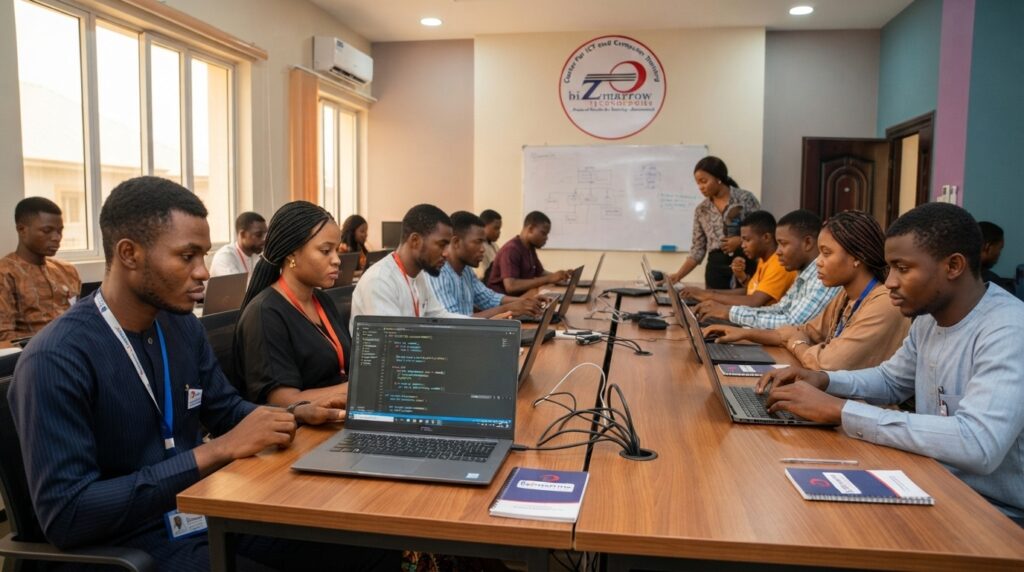
At Bizmarrow Technologies, students receive 90% practical training, ensuring they spend more time applying concepts than studying theory.
Students also complete real-life projects before graduation, giving them valuable hands-on experience and helping them build professional portfolios that demonstrate their abilities to employers.
The training also includes:
- Hands-on experience with Python and modern data analysis tools
- Industry-relevant projects
- Career support and job readiness preparation
- Guidance from experienced instructors
- Practical learning aligned with current industry needs
This practical approach prepares students for employment, freelancing and entrepreneurship in today’s technology-driven economy.
Learn Python for Data Analysis with Bizmarrow Technologies
If you’re searching online for “Python training near me,” “data analysis classes near me,” “Python course in Abuja,” or “best data analytics training in Nigeria,” Bizmarrow Technologies provides practical, industry-focused training designed to help beginners and professionals develop job-ready skills.
Students learn through hands-on exercises, practical assignments and real-world projects that build confidence and professional competence.
Bizmarrow Technologies Training Locations in Abuja
Central Business District (CBD)
Bizmarrow Technologies
Suite B106 & B108 Millennium Plaza
Opposite NNPC Towers
Herbert Macaulay Way
Central Business District, Abuja
Gwarinpa Office
Bizmarrow Technologies
Suite 10 and 15, H-MEDIX Mall
2nd Avenue
Gwarinpa, Abuja
These convenient locations make it easier for students across Abuja to access practical technology and digital skills training.
Frequently Asked Questions (FAQs)
1. What is Python used for in data analysis?
Python is used to clean, organise, analyse and visualise data. It helps businesses discover insights, automate tasks and make informed decisions.
2. Is Python good for beginners?
Yes. Python is one of the easiest programming languages to learn because of its simple syntax and extensive learning resources.
3. Do I need mathematics to learn Python for data analysis?
Basic mathematics is helpful, but you do not need advanced mathematical knowledge to start learning Python for data analysis.
4. How long does it take to learn Python for data analysis?
The learning period depends on your training approach and commitment. With practical training and consistent practice, beginners can develop useful skills within a few months.
5. Can I get a job after learning Python for data analysis?
Yes. Python data analysis skills are in demand across industries including finance, healthcare, technology, telecommunications, education and government. Many professionals also secure remote jobs or freelance opportunities.
6. Where can I learn Python for data analysis in Abuja?
Bizmarrow Technologies offers practical Python and data analysis training in Abuja with locations in the Central Business District and Gwarinpa. The programme includes hands-on projects, career support and job readiness preparation.
7. Is Python for data analysis a good career in Nigeria?
Yes. As more organisations rely on data to drive decisions, Python data analysis has become one of the fastest-growing technology skills in Nigeria, creating opportunities for employment, consulting and remote work.
Start Learning Python for Data Analysis with Bizmarrow Technologies
Python has become one of the most valuable tools for analysing data and solving real business challenges. Learning how to use Python effectively can help you build a rewarding career in data analytics, business intelligence, artificial intelligence and other technology fields.
At Bizmarrow Technologies, students gain practical experience through 90% hands-on training, complete real-life projects before graduation, and receive career support and job readiness guidance to prepare them for success in today’s competitive job market.
Whether you are starting your technology journey or looking to upgrade your skills, Bizmarrow Technologies provides the practical learning environment you need to succeed.