Technology is changing education in Nigeria in ways that were difficult to imagine a few years ago. Learning is no longer limited to physical classrooms, textbooks, and traditional teaching methods. Today, students, professionals, entrepreneurs, and career changers can attend online classes, access learning materials from anywhere, collaborate digitally, and acquire practical skills for the modern workplace.
From primary and secondary schools to universities, professional training centres, and online learning platforms, technology is creating new ways for Nigerians to learn and prepare for the future.
If you have ever asked, “How is technology transforming education in Nigeria?”, “What is the impact of technology on Nigerian students?”, “What tech skills should I learn for the future?”, or “Where can I find practical tech training near me?”, this article provides the answers.
1. Technology Is Expanding Access to Education
One of the biggest impacts of technology on education in Nigeria is improved access to learning opportunities.
In the past, many people had to be physically present in a classroom to participate in a course. Today, technology allows learners to access educational content through online platforms, virtual classrooms, video conferencing tools, recorded lessons, and digital resources.
This has created more flexible learning opportunities for:
- University students
- Working professionals
- Entrepreneurs
- Parents
- Career changers
- People living far from training centres
Someone in one part of Nigeria can now access a course, attend a virtual class, or use digital learning resources without necessarily travelling long distances.
However, technology does not automatically guarantee effective learning. Students still need discipline, access to suitable devices, reliable internet, and structured guidance to get the best results.
2. Digital Skills Are Becoming an Important Part of Modern Education
Education is no longer focused only on traditional academic subjects. As businesses and workplaces become increasingly digital, there is a growing need for people who understand how to use technology and apply practical skills.
Some of the digital skills becoming increasingly important include:
- Data analysis and data visualization
- Artificial intelligence and machine learning
- Cybersecurity
- Software and mobile app development
- UI/UX and product design
- Digital marketing
- Graphic design
- Video editing
- Motion graphics and animation
- Cloud computing
- Automation
These skills can create opportunities in employment, freelancing, entrepreneurship, and remote work.
For many Nigerians, learning a digital skill alongside formal education can provide an additional pathway to career growth. A university degree remains valuable, but practical skills can help students and professionals demonstrate what they are capable of doing in real-world situations.
3. Learning Is Becoming More Interactive and Practical
Technology is also changing how people learn.
Traditional education has often focused heavily on lectures, note-taking, and examinations. While these methods still have a place, digital tools are making it possible to create more interactive learning experiences.
Students can now learn through:
- Video tutorials
- Interactive software
- Simulations
- Virtual laboratories
- Online assessments
- Collaborative platforms
- Digital projects
- Practical assignments
This is especially important for technology and creative careers.
For example, someone learning data analysis needs to work with real datasets and build dashboards. A graphic design student needs to create actual designs. A cybersecurity learner benefits from hands-on labs and simulations. A software development student must build applications rather than only study programming concepts.
The future of education is increasingly moving towards a combination of knowledge, practical experience, creativity, and problem-solving.
4. Artificial Intelligence Is Changing the Learning Experience
Artificial intelligence is becoming another major force in education.
AI-powered tools can help learners explore difficult topics, generate ideas, practice skills, analyze information, improve productivity, and receive explanations tailored to their questions.
Students and professionals can use AI to:
- Understand complex subjects
- Brainstorm ideas
- Practice coding and technical skills
- Research topics
- Analyze information
- Improve productivity
- Receive additional learning support
However, AI should be used as a learning assistant rather than a replacement for thinking.
The ability to ask good questions, evaluate information, solve problems, and apply knowledge remains important. As AI becomes more widely used, Nigerians will increasingly need to understand not only how to use AI tools but also how to use them responsibly and effectively.
5. Education Is Becoming More Career-Focused
Another major transformation is the growing focus on career readiness.
Employers increasingly want people who can demonstrate practical abilities. This is why portfolios, completed projects, problem-solving skills, and practical experience are becoming more important.
A certificate may open doors, but employers and clients also want evidence that a person can apply what they have learned.
Modern learners need to demonstrate that they can:
- Use professional tools
- Complete practical tasks
- Solve real problems
- Work on projects
- Communicate effectively
- Collaborate with others
- Adapt to new technology
This is particularly important in technology and creative industries, where a strong portfolio can demonstrate skills more effectively than simply listing courses completed.
The Growing Importance of Practical Tech Education in Nigeria
As technology continues to transform industries, there is a growing need for training that goes beyond theory.
Learners need opportunities to practice what they are taught, make mistakes, receive guidance, and work on projects that reflect real-world challenges.
This is why practical, career-focused technology education is becoming increasingly important for students, graduates, professionals, and entrepreneurs in Nigeria.

Learning Future-Ready Digital Skills at Bizmarrow Technologies
For individuals searching for tech training near me in Abuja, computer training in Abuja, digital skills training near me, or a practical place to learn technology skills, Bizmarrow Technologies provides industry-focused training designed to help learners develop practical abilities.
Bizmarrow Technologies focuses on helping beginners, students, professionals, and career changers acquire relevant digital and technology skills.
90% Practical Training
A major part of the Bizmarrow learning approach is its emphasis on hands-on experience.
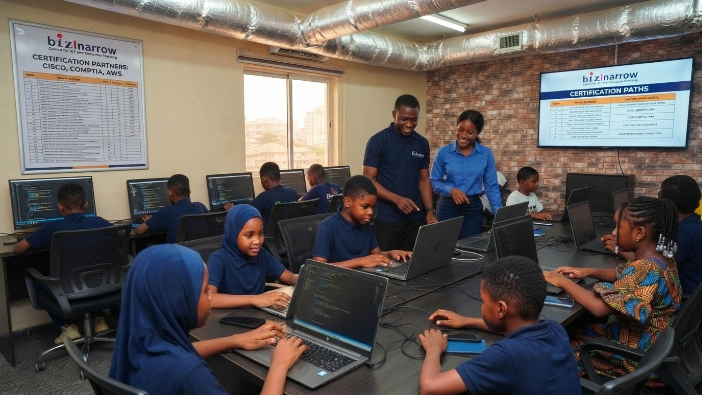
Students spend approximately 90% of their training on practical exercises and hands-on learning. Instead of focusing mainly on theory, learners are given opportunities to apply concepts, use relevant tools, and build confidence through practice.
This approach helps students gain experience with the tools and workflows used in their chosen career paths.
Real-Life Projects Before Graduation
Knowing how to use a software tool is different from knowing how to apply it to solve a real problem.
At Bizmarrow Technologies, students work on real-life projects before graduation. These projects allow learners to put their knowledge into practice and build work that can contribute to a professional portfolio.
Whether a student is learning data analysis, UI/UX design, software development, cybersecurity, graphic design, video editing, motion graphics, or another digital skill, project-based learning helps connect classroom knowledge with real-world application.
Career Support and Job Readiness
Learning a digital skill is only one part of preparing for professional opportunities.
Bizmarrow also emphasizes career support and job readiness through career guidance, employability skills training, portfolio development, professional mentorship, and preparation for the workplace.
The goal is to help learners move beyond simply completing a training programme and become better prepared for employment, freelancing, entrepreneurship, or career advancement.
Where Can I Learn Tech Skills Near Me in Abuja?
For people looking for practical technology training in Abuja, Bizmarrow Technologies has training locations in both the Central Business District and Gwarinpa.
Central Business District Office
Bizmarrow Technologies
Suite B106 & B108, Millennium Plaza, Opposite NNPC Towers, Herbert Macaulay Way, Central Business District, Abuja.
Gwarinpa Office
Suite 10 and 15, H-MEDIX Mall, 2nd Avenue, Gwarinpa, Abuja.
These locations provide convenient access for learners across Abuja who want to develop practical and career-focused digital skills.
The Future of Education in Nigeria
Technology will continue to influence how Nigerians learn, work, and prepare for future careers.
The education system is likely to see a stronger combination of:
- Physical and online learning
- Artificial intelligence
- Interactive learning tools
- Digital collaboration
- Practical projects
- Personalized learning
- Career-focused training
- Continuous professional development
The most successful learners in the future may not simply be those who memorize the most information. They will increasingly be those who can learn continuously, adapt to changing technology, think critically, and apply their knowledge to solve practical problems.
Final Thoughts
Technology is transforming education in Nigeria by making learning more accessible, flexible, interactive, and career-focused. It is also increasing the importance of practical digital skills that can prepare people for changing career opportunities.
For students, graduates, professionals, and entrepreneurs, this transformation presents an opportunity to combine traditional education with practical technology skills.
For anyone looking for a place to learn digital and technology skills in Abuja, Bizmarrow Technologies offers a practical learning environment built around 90% practical training, real-life projects before graduation, career support, and job readiness.
As technology continues to evolve, continuous learning and practical skills development will remain important for anyone who wants to stay relevant in the future of work.
Frequently Asked Questions About Technology and Education in Nigeria
How is technology transforming education in Nigeria?
Technology is expanding access to online learning, digital resources, virtual classes, interactive tools, practical training, and career-focused skills development.
What are the benefits of technology in education?
Technology can make learning more flexible, accessible, interactive, collaborative, and practical. It also gives learners access to a wider range of educational resources and learning opportunities.
What tech skills should Nigerian students learn?
Students can explore skills such as data analysis, cybersecurity, software development, UI/UX design, artificial intelligence, digital marketing, graphic design, video editing, motion graphics, cloud computing, and automation.
Can I learn a tech skill without a computer science degree?
Yes. Many digital skills can be learned through structured training, consistent practice, practical projects, and continuous learning. Requirements may vary depending on the specific career path.
Why is practical training important in tech education?
Practical training allows learners to apply what they learn, use professional tools, solve problems, complete projects, and build portfolios that demonstrate their abilities.
Where can I learn tech skills near me in Abuja?
Bizmarrow Technologies offers practical digital and technology training at its Central Business District and Gwarinpa locations in Abuja.
Does Bizmarrow Technologies offer practical training?
Yes. Bizmarrow emphasizes 90% practical training, allowing students to spend most of their learning time developing hands-on skills.
Will students work on real-life projects before graduation?
Yes. Students work on real-life projects before graduation, helping them gain practical experience and develop projects that can support their portfolios.
Does Bizmarrow provide career support?
Yes. Bizmarrow provides career guidance, employability skills training, mentorship, portfolio support, and job-readiness preparation.
What is the future of education in Nigeria?
The future of education in Nigeria is likely to involve a stronger combination of technology, AI, physical and online learning, interactive tools, practical projects, and continuous skills development.